The Third Act in Academia
I am leaving Warwick University after 15 years.
When I arrived, my research focused almost entirely on the analysis of complex systems in defence, working with BAE Systems, Rolls-Royce, and SELEX Galileo. That work revealed something fundamental: data is not just an input—it is a coordination resource. Data flows create visibility, and that visibility can enable better incentive alignment, reduction in transaction costs and complexity, and achieve systemic outcomes quicker and more efficiently.
From theatre operations to “three-block wars,” I examined when and how data flows improved coordination across the defence ecosystem.
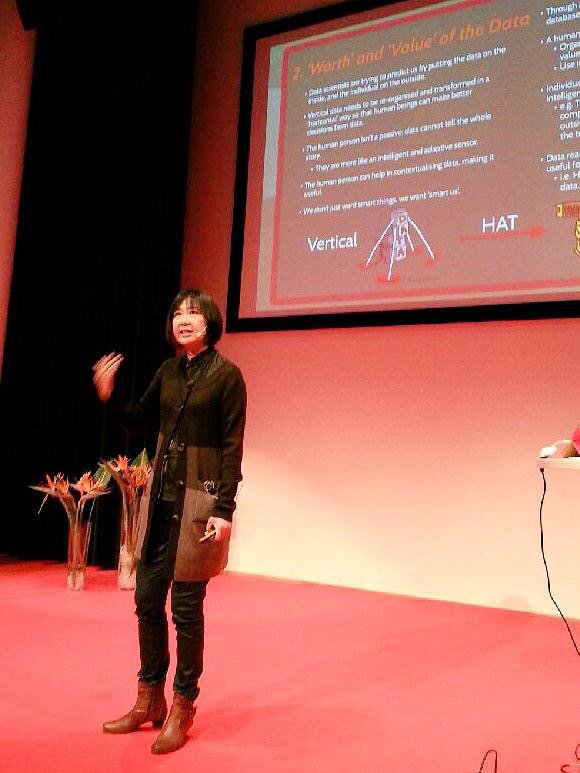
In 2011, when I started at Warwick, I began applying these ideas to markets on the Internet. It quickly became clear that data could address some of the world’s most persistent “horizontal” problems—sustainability, inclusion, and beyond. Yet the very act of coordinating through data introduced new layers of complexity and cost. I came to describe this as the “coordination trap” (paper currently under R&R so ping me if you’d like a copy).
As the saying goes, you can’t learn swimming in a library. Designing and implementing markets and complex systems is closer to archaeology—you have to go out and dig.
I became convinced that my work had to evolve: from analysis, to design, and ultimately to execution. In 2015, I built a tool, a business around it, and a product - to reduce transaction costs through data. Over time, I tested where this tool could gain traction, probing existing markets for leverage points. Through this process, I uncovered the underlying components of markets and ecosystems.
Years of “digging” followed.
As I experimented, I identified recurring ecosystem elements and began assembling a design canvas—bringing together Institutional Economics and Service-Dominant Logic into a practical discipline of ecosystem design. As the problems I engaged with grew broader, more complex, and more “wicked,” the framework evolved with them.
This work led to the Smart Data Ecosystem Canvas, now used in the HATLAB Studio with the Dataswyft Wallet. Alongside this, I run the markets and ecosystems course every three months under the studio’s SEE-ME program to train new ecosystem architects. The approach is deliberately technology-agnostic. It focuses on coordination challenges and the intentional design of ecosystems—participation, incentives, roles, and flows. I am particularly pleased with how this has developed as a consulting and learning product. As ecosystem architects mature and real-world deployments expand, these systems will generate rich data—creating a platform for future research into coordinating markets and ecosystems across logistics, supply chains, sustainability, and inclusion.
At first, I described my departure from Warwick as “retirement.” But that word doesn’t fit.
I continue to have an active research agenda. I am also enjoying supporting a small number of younger scholars whose work I deeply admire. “Retirement” feels like a legacy concept from another era. Jane Fonda puts it better: this is my third act—and I suspect it may be the most interesting one yet.
In the age of AI, academia must more clearly articulate the trajectory from learning, to design, to impact—especially in business education. Businesses today must be intentionally designed around the markets they serve, and they must be data- and AI-enabled.
With the emergence of the “three-person unicorn” (yes, this is a reality), this is no longer theoretical.
We need to support:
businesses - regardless of size or structure - in engaging with their markets (micro: value co-creation and the exchange),
the intentional design of markets themselves (coordination, “platforming”, ecosystems) (meso: institutional organisation), and
nation-states in coordinating markets (macro: policy design) in a post-digital era.
My third act in academia will focus on advancing this unified discipline within digitally mediated markets and ecosystems—across research, learning, design, and impact—for organisations large and small, and across borders. I believe I am well placed to do this. My work spans multiple business disciplines, with strong publications across Marketing, Information Systems, and Operations Management, alongside ongoing work in Institutional Economics. This cross-disciplinary grounding has consistently pointed to the need for a systems approach to business education, research and impact—an agenda I now intend to push further. And since I live and work across Boston, London, Paphos, and Kuala Lumpur, I am also well placed to take this agenda forward globally.
I started with a short book (The Great Sleepwalk) and over the next 6 months, I will be talking to friends and colleagues in academia and industry across the globe interested to engage with this approach (do reach out on LinkedIn if this resonates).
I hope to find deeper synergies with my investment and entrepreneurial work, though I am equally comfortable keeping these domains distinct.
Thank you to Warwick, WMG, and all my colleagues. It has been an extraordinary 15 years.
On to the next chapter.